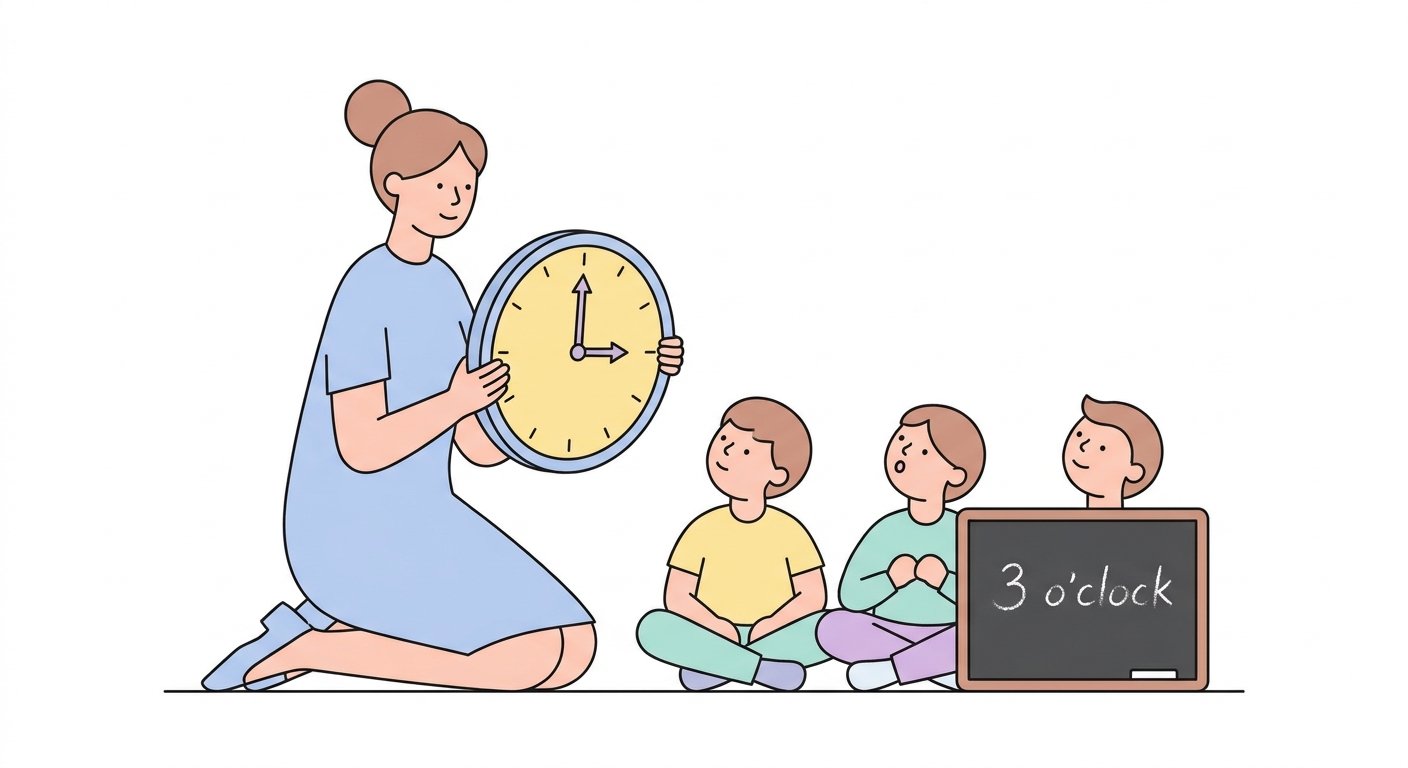
Teaching whole hours is the gateway to all time-telling skills. This guide walks you through a proven sequence. For a broader curriculum overview, see our homeschool time curriculum guide.
Step 1: Clock Exploration
Let children explore real clocks. If you're teaching a child with special needs, our adaptive time-telling tools guide offers modified approaches.
Step 2: The Hour Hand Only
Use a clock with only an hour hand. This eliminates confusion and lets children focus on one concept: where the short hand points tells us the hour.
Step 3: Matching Games
Show a clock face and have children match it to the correct digital display. Time Bingo on Easy mode is perfect for this. For printable versions, check out our free clock worksheets.
Step 4: Connecting to Life
"What do we do at 8 o'clock? We start school!" This is the same principle behind using daily schedules for time practice.
When to Move to Half Hours
Once a child can reliably identify all 12 hours, they're ready. The progression mirrors the difficulty levels in our kindergarten activity collection.