2nd Grade Time-Telling Standards
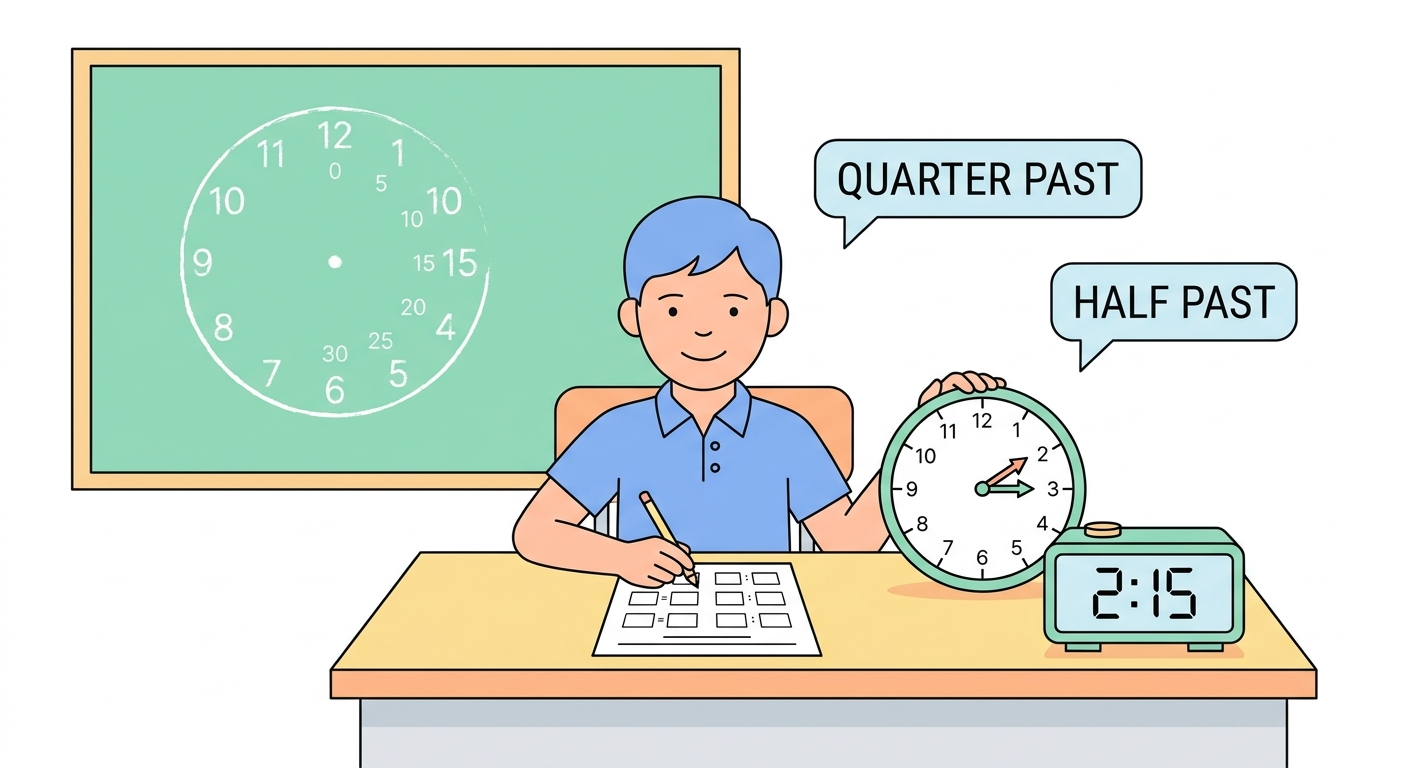
By 2nd grade, students are expected to tell and write time from analog and digital clocks to the nearest five minutes, using AM and PM (Common Core 2.MD.C.7). This is a significant step up from kindergarten, requiring students to understand the minute hand's position and skip-count by fives around the clock.
Skills to Master
- Reading to 5 minutes: 1:05, 1:10, 1:15, 1:20, 1:25... through :55
- Quarter hours: Quarter past, half past, quarter to
- AM vs. PM: Understanding morning and afternoon/evening times
- Elapsed time basics: Simple "how long until" problems
- Analog to digital conversion: Matching clock faces to digital displays
Using Time Bingo for 2nd Grade
Set Time Bingo to Medium difficulty for quarter-hour practice, or Hard difficulty for 5-minute interval mastery. The competitive game format motivates students to quickly recognize and match times, building fluency through repetition.
Differentiation Strategies
- Struggling learners: Start with Medium (quarter hours) and use a reference clock
- On-level students: Hard difficulty with standard play
- Advanced students: Expert mode with elapsed time bonus challenges
- Small groups: Create online rooms with 4-6 students for focused practice
Word Problem Integration
After playing Time Bingo, extend learning with word problems: "The bingo game started at 2:15 and the winner was announced at 2:40. How many minutes did the game last?" Explore our full collection of time word problems for 2nd grade.
Building on Kindergarten Skills
Students should arrive with a solid foundation from kindergarten time activities. If they're still struggling with hours, revisit teaching whole hours before advancing. For students with learning differences, our special education resources provide adapted approaches. Homeschool families can find the full progression in our curriculum guide, and ESL students benefit from our time vocabulary resources.